
Rhode set up a kiosk in Minori, on the Amalfi Coast. 175 slots available, 66,000 likes on a single post. Zero media buy. The brand earned more organic reach in one August weekend than it did from a full quarter of paid social.
No surprise there.
The experiential pop-up runs on a peculiar economy. The consumer chooses to stand in line. 175 people photographing the same space and posting it to their own stories are 175 zero-cost micro-campaigns, delivered in the exact format their audience consumes. The brand generates distribution — it generates it as a side effect of a well-designed experience.
Beauty wrote the playbook. Everyone else is copying it.
Bookings for beauty activation spaces doubled in six months in 2025. Cosmetics has become the fastest-growing experiential category in the world. The reason is structural: beauty compresses the entire funnel into a single physical gesture. Discovery, trial, purchase, sharing — it all happens in the same square meter, in the same minute. No digital funnel can replicate this density of conversion.
Rhode in Minori. MCoBeauty turning the format into an escape room. Kayali opening a café in New York where the coffee smells of oud, just like the fragrance on sale. NYX building an ASMR activation with Pinterest. Every execution is different. The mechanics are always the same: a space designed around a visitor’s gesture that simultaneously produces experience, sales, and content.
Fashion, food, and consumer tech are all importing the model.
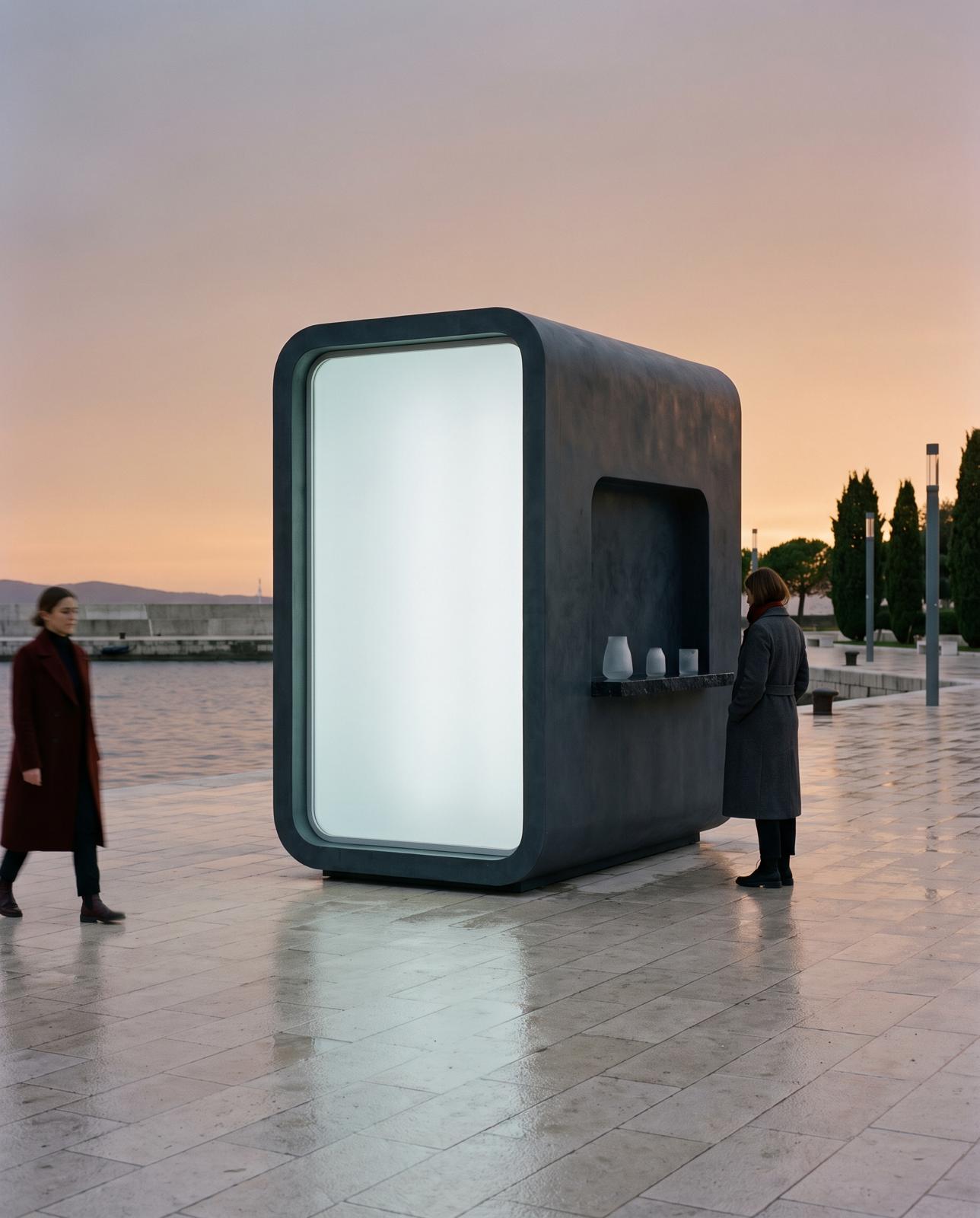
Most pop-ups produce no measurable effect at all. They open, exist for a few days, and close. No line, no spontaneous content, no useful data. The reason is almost always the same: the space was conceived as a container rather than as a device.
A pop-up that works is a project in behavioral direction. Where the visitor enters, where they turn their head, where they stop, where they raise their phone — the space guides behavior without the visitor noticing. And it guides them toward a precise output: the photographic gesture, the shot the brand wants published. Designing a pop-up means designing a point of view — the one framed by the visitor’s smartphone.
Then there’s technology. LED walls that function as narrative surfaces. Sensors that trigger content as people pass. Sound design below the threshold of consciousness. Projections that turn surfaces into living screens. Technology in a pop-up works when it’s invisible — when the visitor experiences something extraordinary without wondering how. That only happens when it’s designed alongside the architecture, at the same table, on the same day. Every time it’s added later, you can see it. Always.
And then there’s the operational machine. A pop-up lives in squares, seafront promenades, historic buildings. Contexts with no pre-installed power supply, where setup has to be completed in 48 hours. Site engineering.
This expertise already exists
Every exhibition stand in the world works exactly like a pop-up: a temporary space, an extremely tight build, integrated technology, an experience designed to guide the visitor toward a specific action, teardown the next day. The skills are identical. Only the brief changes.
At a trade fair the audience is a B2B buyer and the action is the commercial lead. In a pop-up the audience is an end consumer and the action is the photo, the purchase, the word of mouth. But the structure of the project — space as an experiential machine — is the same.
At VØID Exhibition we’ve been designing this way for years. We start from the visitor’s gesture and build backward toward the structure. We integrate LED, sensors, sound design, and generative projections into the architecture itself. We manage the full pipeline, from creative direction to site engineering.
For us, the experiential pop-up store isn’t a new market. It’s the same craft, applied to a different brief.